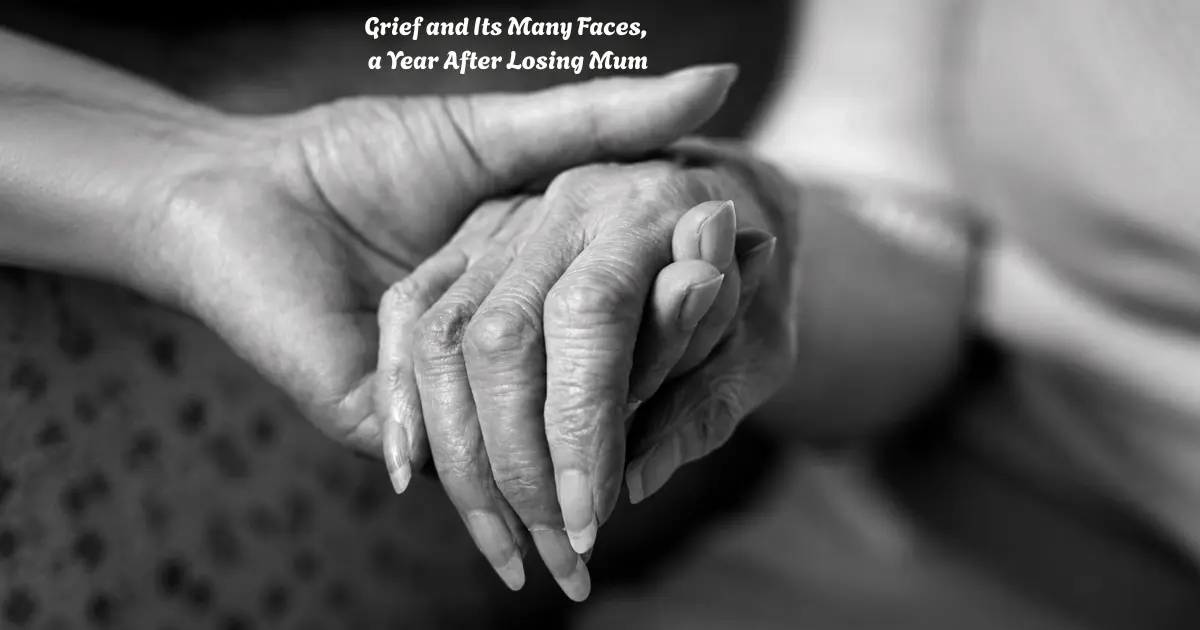
“Zinda hu yaar…kaafi hai,” I said to myself after crying incessantly for over an hour, a year after my mum passed. Before I experienced this loss, even the minutest of things used to feel like a “loss.” No hike? A loss for me. Didn’t get the position I wanted? A loss for me. Had a fight with friends who decided to stop talking to me over someone else’s mistake? A heartbreaking loss for me.
But, you know something? You’ve never really experienced loss until you’ve actually lost a parent. The magnitude of losing the one person who brought you into this world, taught you your first step, your first word, shared your first meal with you, is inexplicable. No language in the world has enough letters to describe this feeling.
And yes, I know the most obvious thing everyone will say: “You aren’t the only one experiencing this loss—there are many in the world who lose their parents.” Not just this, the most common thing people say to you after you’ve lost a parent, “Bhagwaan ki marzi thi…uske aage koi kya kar sakte hai,” also came my way from those who have probably never had the courage to question God. There’s also the lot that drops in to tell you, “Beta, time will heal you. Sabko jana hi hai ek din.”
What no one—and I mean no one—realises is that with the parent, a very significant part of you also dies. I wasn’t only mourning the loss of my lovely, beautiful and amazing mother; I was, unknowingly, mourning the loss of the little Twinkle who used to run to her mum at the first sign of happiness, discomfort, heartbreak or sadness. I was no longer her “bacha.” I was an adult—the one who had to watch a piece of her heart surrender to the fire gods and later to Maa Ganga.
With every ritual that followed, it felt as if I was losing her—again, and again, and again.
And mind you, none of this happened immediately. The immediate shock of what had happened was overtaken by the responsibility of being an adult who had to ensure everything was done as per the rituals. That my mother—who was now being referred to as ‘mortal remains’—had to be given a proper send-off. Within minutes of being told the most devastating news, I had to act all right in front of relatives and friends who came to mourn the loss of the person they knew, or thought they knew.
I did all of it. The hospital documentation, the signings, the phone calls to relatives, to friends, to the cremation ground, to the family pandit for the rituals, to the cook for food for everyone coming, to the maids to keep the house clean. And yet, I was told: “Tum ladki ho. Tumhare haath nahi lagenge cremation pe. Sab ladka hi karega.” So while I was hurting from her physical loss, I had to lose her again—lose the right to participate in things which she had given me the moment she gave birth to me from the same warm womb as my brother. You know the feeling of a broken leg being hammered again and again? Yeah. It felt even worse.
I had so many things (not so kind) to say to everyone. But then I heard a voice from within—a voice that has never failed me, even when I’m about to act like my father’s badtameez daughter—the voice of my mum, reminding me that I am hers too. She said, “Wadde haige ae. Koi nahi putt…jaan de. Nahi kuch galat bolna.”
That did it. I silenced myself, just the way she was silenced when she left the world. A silence that lingers, a silence that hides the anger within, a silence that conceals a thousand curses. A silence that still stays with me as grief, a year later.
Grief, as I said, didn’t come to visit me immediately. It came once everything was done. Once everyone had gone back to their homes. Once I was alone with my brother and father in a house that felt like a graveyard. A home that used to echo with my mum’s laughter, with her constant calls of “Main Keha, Main Keha” to my father, with her constant yells at my brother to help her with the housework, with her pained voice calling me and saying, “Ghar aaja…tainu milan da jee kar reha hai.” That same home became just a house with four walls, holding three broken people whose world had fallen apart.
I can’t speak for my father or my brother about how they processed their grief. My dad cried, my brother cried…I cried. But grief? I don’t know whether they’ve processed it, or even begun to understand it. For me, this grief came in waves. It was similar to the grief I felt when I lost my loving grandpa in 2016. A grief that still hits me unexpectedly on some days, and I can’t even move.
Initially, I thought I would never be able to laugh again. I honestly felt like my life was over. I had a million regrets: “Why didn’t I go to meet her when she asked me to come home?” “Why didn’t I speak to her when she called?” “Why wasn’t I there for her?” I had no strength to go on…and then I heard it again. A week after her loss, I heard her voice inside me once more—“Kudiye, uth…office jaa. Ghar baike kuch ni hona.” It broke me. Why? Because even when she wasn’t there in this earthly realm, she was still watching out for me, still asking me to do my duty.
I went back to work a week after her cremation, and you know what? Her voice saved me again. Had I not returned, I would have drowned. The sight of people who had only support to give—without actually saying anything—was like oxygen. Until that point, it felt like I was gasping for air; returning to a place where, for a second, I could forget what had happened, and see people who didn’t offer me advice, who just sat with me in silence, felt like a breeze.
But the irony hit me. I was back at the very place where the news had been broken to me that Mumma had passed. The moment that thought came, I broke down. I cried at work, at my desk, where I should have been working. My colleagues? They again didn’t offer me advice. They just brought me a tissue and helped me breathe again. Grief, as I said, came in waves after that.
I would burst into tears watching movie scenes that earlier hadn’t hit me so much. I would burst into tears while eating something she liked. I would bawl when the radio played a song she loved. In things that never used to matter to me, I found her. And immediately, I would feel the urge to call her, to hear her voice. I would pull up her contact and stare at it for hours, knowing that if I dialled the number, I wouldn’t hear the voice that gave me strength, wouldn’t hear her constant “Has leya kar kudiye,” wouldn’t hear her laughter. This was another kind of grief—the one that sneaks in through the most ordinary things.
Everyone talks about the bigger grief—the sadness that follows losing a parent. The obvious one. But no one talks about this grief, the quiet, everyday one. The one you have to live with every day, every hour, every minute, every second. This grief, in my opinion, is much worse than the immediate sadness one may feel.
And honestly, a year later, I know this grief isn’t going anywhere. I feel it. But now, I acknowledge it. I don’t hide it. I let it out. Because now, this grief is also a reminder of her. It is a reminder of my inner child, who passed away too. It is a reminder of all the love I had for her, and now, it has nowhere to go.
If even a fraction of what I’ve described here feels familiar to you, I imagine you’re carrying a version of this same quiet, everyday grief—and I wanted you to know it has a name, and it isn’t just yours to carry in silence. Why am I writing this? Because the internet is a vast space. There may be many who are going through this same feeling. And if even one of them reads this, I want them to know: you are not alone. You have me. We’re sailing in the same boat—a boat which may have a hole in it, which might be filling with water, but we’ll throw the water out, and somehow, save ourselves from drowning, for the ones we lost, the ones we love.